




News & Insights
8 Min Read

The "Passive Income" Myth Nobody Talks About
The pitch sounds so clean: "Rent out your spare room (or second property) and earn passive income."
Passive. That word is doing a lot of heavy lifting there.
Here's what the pitch leaves out:
The average Airbnb host works 20 to 40 hours per week managing their listing. Guest communications. Coordinating cleaners. Monitoring pricing. Responding to reviews. Handling maintenance issues. Chasing down check-in problems. Updating calendars. Fielding complaints. Writing guest guides. The list goes on.
The average host earns around $1,910 per month from their listing. If you're working 30 hours a week, a reasonable middle estimate, that works out to roughly $15 per hour before expenses. After cleaning fees, platform costs, supplies, and the occasional repair, you're looking at closer to $8–10 per hour.
That's less than minimum wage in most U.S. states.
And it got worse in 2025 when Airbnb raised host fees by 15.5%, quietly compressing margins for hosts who were already running thin. If you ran the math before that increase and thought the numbers worked, it's worth revisiting.
None of this means Airbnb can't be financially worthwhile, it absolutely can be. But "passive income" it is not. It's a business. And like any business, it either gets properly resourced, or it drains the person running it.
Most hosts burn out within two years. The early excitement carries you through the first stretch. Then the novelty wears off, the workload doesn't, and you start to wonder whether any of this was actually worth it.
Related: Is Airbnb Still Worth It in 2026? An honest look at the real numbers →
The 5 Hidden Costs of Burnout (That Don't Show Up in Your Earnings Report)
The financial math is bad enough. But Airbnb burnout has costs that never show up in your payout statement, and they're the ones that tend to hit hardest.
1. Your Relationships
You're at dinner with your family. Your phone buzzes. You tell yourself you'll check it after dessert, but you can't focus on the conversation because you're wondering if it's something urgent. You check it. It is. You spend fifteen minutes handling it while everyone else finishes eating.
This happens dozens of times per week for active hosts. The phone is always there, always potentially demanding something. Even when you try to be present, you're not fully present. The people around you feel it, even if they don't say it.
2. Your Sleep
Here's a number that should give you pause: 75% of guest messages arrive after 11PM.
Guests check in late. They have questions at midnight. They discover issues at 1AM. They message about checkout at 6AM. Airbnb's algorithm rewards fast response times, so you feel pressure to reply quickly, which means your sleep is at the mercy of other people's schedules, indefinitely.
Chronic sleep disruption is not a minor inconvenience. It compounds. After months of it, you're not just tired, you're depleted in ways that affect your judgment, your mood, and your health.
3. Your Ability to Actually Take a Vacation
The cruelest irony of Airbnb burnout: you're theoretically earning the income that should make travel and freedom possible, but you can never fully disconnect.
The last time you tried to take a trip, how much of it did you actually enjoy versus spend checking your phone? Most hosts report that vacations aren't really vacations anymore, they're just working from a different location with worse Wi-Fi.
4. The Mental Load You're Carrying 24/7
Even when you're not actively managing anything, you're thinking about it. Did the cleaner confirm for tomorrow? Did that review come in yet? Is the pricing right for next weekend? Did I respond to that question from the potential guest?
This background mental noise is exhausting in a way that's hard to quantify but easy to feel. It takes up cognitive and emotional bandwidth that could be going toward things that actually matter to you.
5. Opportunity Cost
Here's the question most hosts never stop to ask: what would you do with 30 extra hours per week?
Build something. Spend time with people you love. Rest. Pursue work that actually interests you. Exercise consistently. Read. Think.
The opportunity cost of Airbnb hosting isn't just the hours you spend, it's everything you could have done with them. For most people, those alternatives are worth far more than $8–10 per hour.
The Signs You're Already Burned Out
Burnout doesn't announce itself clearly. It builds slowly, then all at once. Here are the signs most hosts recognize when they're honest with themselves:
You dread checking your phone. What used to feel exciting (a new booking!) now triggers anxiety. What does this person want? What's wrong now?
Turnover days feel like mini-emergencies. The window between checkout and check-in always seems to be shrinking, and something always goes sideways, the cleaner is late, a guest left a mess, a supply ran out.
You've seriously considered selling a profitable property just to make it stop. This is the most telling sign. When a money-making asset starts feeling like a liability because of the stress attached to it, something has gone deeply wrong in the equation.
Your response time is slipping. You used to respond in minutes. Now it's sometimes hours. You know it's hurting your reviews and your ranking, but you just can't make yourself care as much as you used to.
You've snapped at a guest, or caught yourself composing a reply in your head that you knew you couldn't actually send.
If any of these feel familiar, you're not failing as a host. You're experiencing something that happens to the vast majority of people who try to run a short-term rental business alone, without the right infrastructure.
Sound familiar? You're not alone, and you don't have to sell your property or keep grinding. There are options that didn't exist two years ago. Keep reading.
Why "Just Automate" Doesn't Actually Solve the Problem
At some point, most burned-out hosts land on the same idea: automate more. Get a dynamic pricing tool. Set up automated messages. Connect a smart lock. Install a noise monitor.
These tools have their place. But they don't solve burnout. Here's why.
A PriceLabs survey found that hosts using AI-powered hosting tools spend the same 8.3 hours per week on their listing as hosts who don't. Automation tools handle the easy, predictable parts of hosting. But those were never the parts that were burning you out.
What about when the cleaning team cancels four hours before check-in? What about the guest who messages at 1AM because the hot water isn't working? What about the neighbor who calls to complain? What about the review that needs a thoughtful, professional response? What about the pricing decision for a local event weekend you didn't know was happening?
Messaging bots handle maybe 20% of the real problem. The other 80%, the parts that require judgment, relationships, and presence, still land on you.
There's also a subtler problem: every automation tool requires a human to operate it. You traded tasks for dashboards. Instead of answering messages yourself, you're now monitoring whether the bot answered correctly. Instead of updating your calendar, you're checking whether the sync worked. The mental load doesn't disappear, it just shifts shape.
Related: How to stop getting 2AM guest messages (without going offline) →
The Real Solution: Delegate, Don't Just Automate
Here's the false choice that keeps hosts stuck: it's either keep grinding through the burnout, or sell the property and walk away.
There's a third option, and for most hosts, it's the one that actually makes sense.
Hire a team to run it for you. Let hosting become what it was supposed to be: an asset that generates income without consuming your life.
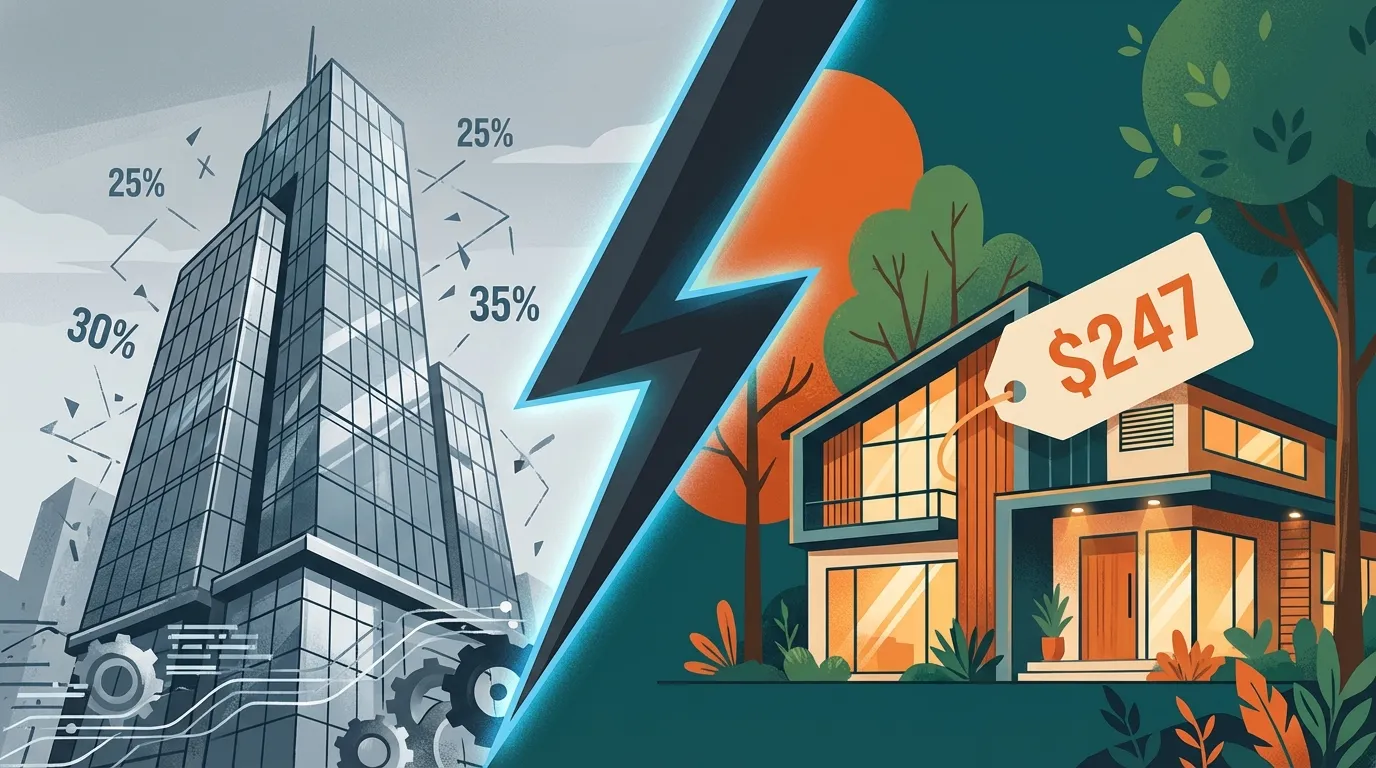
The traditional objection to this is cost. Traditional property management companies take 25–35% of your gross revenue. On a property earning $1,910/month, that's $477–$668 per month off the top, and often your revenue actually goes down with traditional managers because they don't prioritize your listing the way you do.
That math has changed. Flat-fee co-hosting services now exist that handle the full operation of your listing for a fraction of what traditional managers charge.
The structure looks like this: an AI co-host handles guest communications in under 5 minutes, around the clock, so response times stay fast and reviews stay strong. A dedicated human team manages the coordination, cleaning, pricing, vendor relationships, review responses, crisis handling, everything that requires actual judgment and relationships. You stay in the loop on anything major, and otherwise you get your life back.
What does that look like in practice?
Daniela, a host who made the switch, put it plainly: "Honestly, I sleep easy now. I know I am never going to wake up with some stressful situation."
Anthony noticed it most at night: "I love how everything is automated, especially not getting late-night messages."
Parm noticed something else, the quality of attention his listing received: "I feel like I'm the only person you're looking after."
These aren't edge cases. When the right infrastructure is in place, hosting actually works the way it was supposed to. The property earns income. The host's involvement drops to under an hour per week. And, this part surprises most people, revenue tends to go up, not down.
The reason is straightforward: faster response times improve your search ranking. Professional pricing captures more revenue per booking. Consistent, high-quality guest experiences drive better reviews, which drive more bookings. When a human team is running your listing well, the property performs better than when you were running it exhausted.
The average revenue increase for hosts who make this shift is 38%.
Related: What to do when your Airbnb cleaner quits →
Related: Airbnb management companies compared, what you actually get for your money →
HostEasy gives you your life back for $247/month. AI co-host handles guest messages in under 5 minutes, 24/7. A dedicated 4-person human team manages cleaning, pricing, reviews, and crises. Hosts report +38% revenue increase and less than 1 hour/week involvement. $97 first month. 30-day full refund. No contracts. Learn more →
Calculating Your Personal Breaking Point
Before you decide anything, do this math for yourself.
Take your average monthly Airbnb revenue. Divide it by the number of hours you spend managing your listing each month. That's your real hourly rate, before expenses.
Now subtract your actual costs: cleaning supplies, platform fees, occasional repairs, your share of utilities if applicable. The number that's left is what you're actually earning per hour of your time.
For most hosts, it's between $8 and $15.
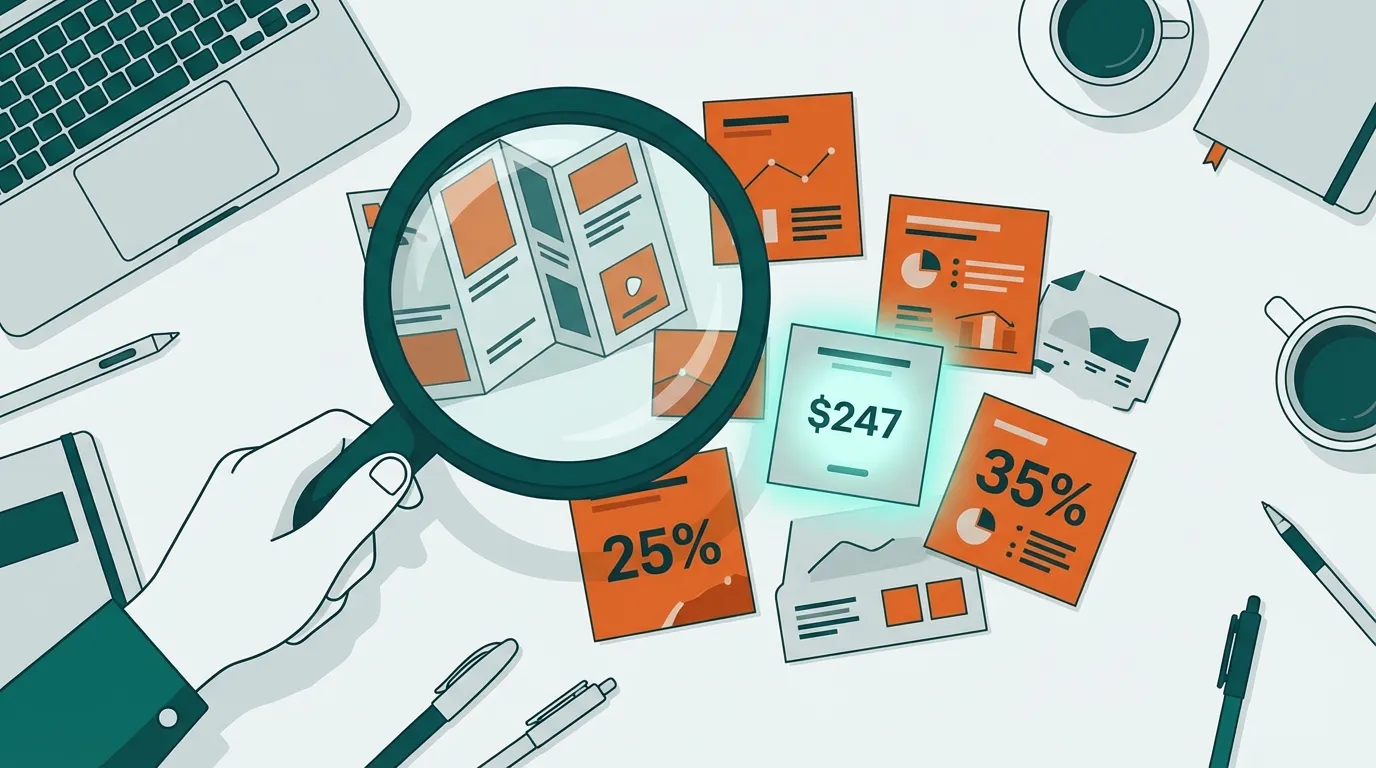
Now ask: if a co-hosting service costs $247 per month and genuinely saves you 25 or more hours per week, what is that worth to you? Not just financially, what is it worth to your health, your relationships, your ability to take a real vacation, your sleep?
And factor in the other side of the ledger: if that same service increases your revenue by 38% through better pricing and faster responses, you're not just saving time, you're likely making more money than you were before, even after the service fee.
Most hosts who do this math honestly arrive at the same conclusion: they've been paying more to self-manage than it would cost to hand it off properly.
You Don't Have to Keep Running on Empty
The passive income promise wasn't entirely wrong, it just left out a step. The step where you build the actual infrastructure to make it passive.
Done right, an Airbnb property genuinely can be an income stream that doesn't consume your life. You can own a rental and still take vacations. You can have the property earn money without your phone owning you. It's not a fantasy, it's just a question of having the right team in place.
The hosts who figure this out aren't working less because they care less. They're working less because they set things up correctly.
If you're at the point where the stress is outweighing the income, the answer isn't to push through and hope it gets better. The answer is to change the infrastructure.
Your time is worth more than $8 per hour. So is your sleep. So is your Sunday.
Join our newsletter list
Sign up to get the most recent blog articles in your email every week.
Similar Topic
Related Blogs


More Articles