




News & Insights
15 Min Read

Which Cities Are Hosting, and What the Data Already Shows
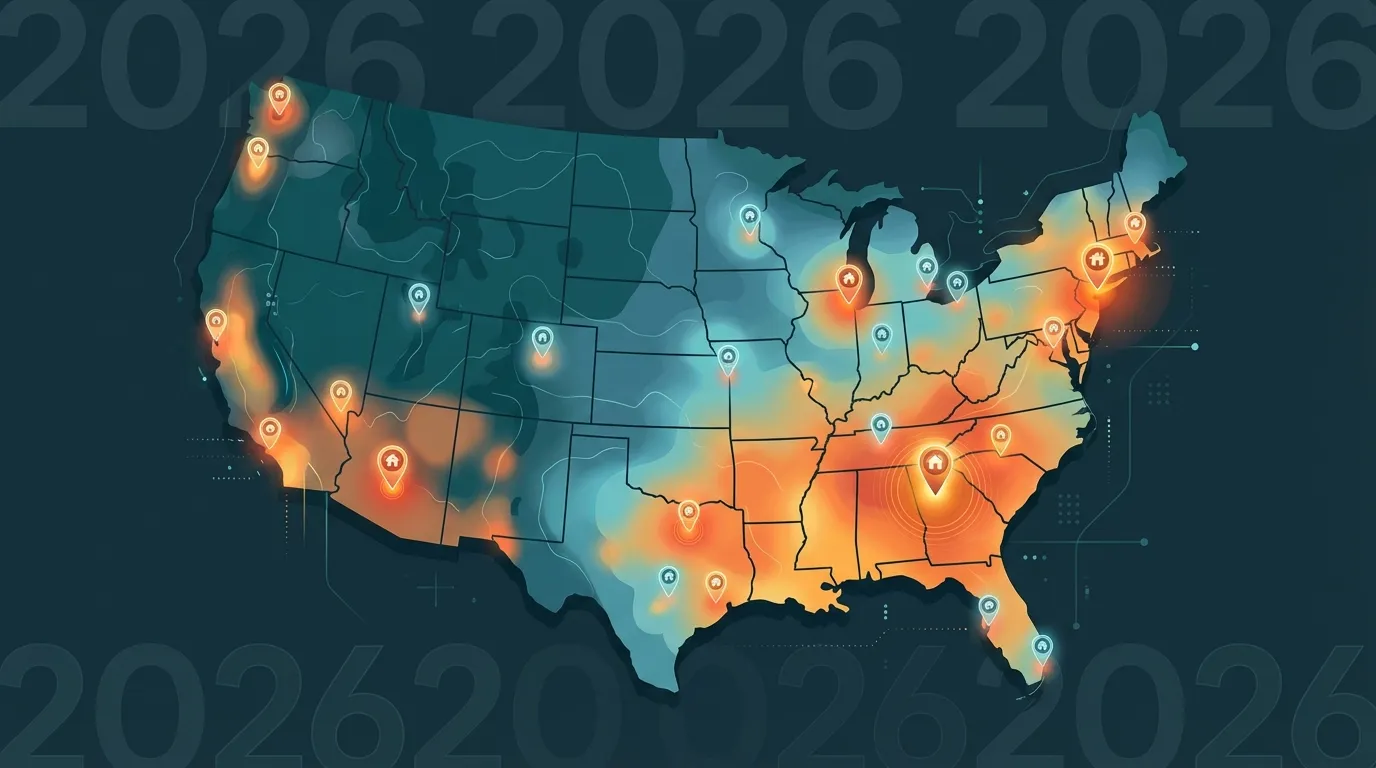
The 2026 World Cup is spread across 16 host cities, which makes this unlike any prior tournament. Instead of one or two concentrated markets, you have a wide geographic spread that creates opportunity in markets that almost never see this level of demand.
Here's where matches are being played, and what the short-term rental data is already showing:
United States Host Cities
Philadelphia One of the standout performers in early booking data. Philadelphia is already seeing a +6.3% RevPAR increase compared to the same period last year, and the tournament hasn't started. The city's compact geography means being "near the stadium" is achievable from a large portion of the city. Lincoln Financial Field has a capacity north of 67,000, and it's hosting multiple matches including knockout rounds.
New York / New Jersey (MetLife Stadium, East Rutherford) The New York metro is expected to host the World Cup Final, the single most-watched sporting event on the planet. MetLife Stadium's surrounding market (Newark, Jersey City, and across the Hudson in Manhattan) is already registering a +5.6% RevPAR lift. If you're within 45 minutes of East Rutherford, you are sitting on prime real estate for the biggest match in soccer.
Dallas (AT&T Stadium, Arlington) Dallas is hosting the most matches of any US city, including multiple knockout rounds. The data reflects that: +5.5% RevPAR growth already, and we're still months out. The DFW metro is massive, which means demand will spread across a wide radius, not just the immediate stadium area.
Miami (Hard Rock Stadium) Miami is always a premium short-term rental market, but World Cup match days will put it in a category of its own. International visitors, particularly from South American nations, will flock to Miami both for matches and for its status as a cultural hub for the Latin American diaspora. Expect enormous demand for Spanish-language-friendly listings and properties near transit corridors.
Houston (NRG Stadium) Houston's international population, one of the most diverse cities in the United States, gives it a built-in fan base for nearly every national team in the tournament. Listings near the Medical Center, Midtown, and Montrose neighborhoods will see strong demand as visitors seek walkable areas between matches.
Los Angeles (SoFi Stadium) LA is a massive, spread-out market, which means the "stadium proximity" premium is harder to claim, but demand will be enormous and citywide. Santa Monica, West Hollywood, Silver Lake, and the neighborhoods around downtown will all benefit. LA hosts multiple group stage and knockout matches.
San Francisco / Bay Area (Levi's Stadium, Santa Clara) The Bay Area's already-expensive short-term rental market gets another demand layer stacked on top. Silicon Valley executives, international tech industry visitors, and fans from across the Pacific Rim will all converge here. Properties in San Francisco proper with easy Caltrain access to Santa Clara will command serious premiums.
Seattle (Lumen Field) Seattle's compact, walkable downtown is a strong setup for World Cup hospitality. Capitol Hill, Belltown, and the International District will all be within walking or light rail distance of Lumen Field. Seattle hasn't hosted a major FIFA event before, this is genuinely new territory for the market, and early data is tracking well.
Kansas City (Arrowhead Stadium) Perhaps the most underrated opportunity on this list. Kansas City is a smaller market where the World Cup's arrival will have an outsized percentage impact on the local STR economy. Hosts here face less competition from established high-demand operators, and the relative scarcity of hotel supply near Arrowhead means STR demand will be unusually concentrated.
Atlanta (Mercedes-Benz Stadium) Atlanta's stadium is purpose-built for mega-events and sits close to downtown, MARTA rail access, and a dense concentration of neighborhoods with established short-term rental inventory. Atlanta has hosted Super Bowls before, the operational infrastructure exists, but STR hosts should expect aggressive demand during match windows.
Boston (Gillette Stadium, Foxborough) Boston's match venue is actually south of the city in Foxborough, the same home as the New England Patriots. This creates an interesting dynamic where both Boston-proper properties AND suburban South Shore properties will see elevated demand. Fans will base themselves in Boston and travel to matches by shuttle or train.
Nashville (potential host city) Nashville has been in discussions as an additional or replacement host venue. If confirmed, Music City's already-booming short-term rental market gets yet another demand spike stacked on top of its existing concerts, bachelorette tourism, and corporate events calendar.
Canadian Host Cities
Toronto (BMO Field) Toronto is Canada's largest city and will be one of the most internationally high-profile host cities in the tournament. Downtown Toronto, the Entertainment District, and neighborhoods along the waterfront will see intense demand. Canadian hosts should be aware of provincial short-term rental regulations, ensure your listing is compliant well in advance.
Vancouver (BC Place) Vancouver's stunning geography and established reputation as an international destination make it one of the most desirable locations in the tournament for fans who want to combine soccer with tourism. Expect premium pricing across the city, particularly in Yaletown, Gastown, and Kitsilano.
Mexican Host Cities
Mexico City (Estadio Azteca) Azteca is the most iconic soccer stadium in the world. Mexico City is already the largest city in North America. This combination means demand will be staggering, but hosts need to be thoughtful about their listing position in a very competitive, price-sensitive market where international visitors will have high expectations for quality.
Guadalajara (Estadio Akron) Guadalajara is Mexico's second-largest city and a cultural hub. It's more compact than Mexico City and has a strong existing tourism infrastructure. STR hosts here should focus on walkability and proximity to transit as key selling points.
Monterrey (Estadio BBVA) Monterrey is Mexico's industrial powerhouse and sits close to the US border. Expect crossover demand from Texas-based fans who want a genuine Mexico experience without long travel times. The combination of local and cross-border visitors will create interesting demand patterns.
The Four-Phase Pricing Strategy
Timing is everything in World Cup pricing. There are four distinct phases, and each requires a different approach.
Phase 1: Right Now (March 2026), Foundation Work
This is the preparation phase. The visitors aren't here yet, but the decisions you make now directly determine your revenue ceiling in June and July.
What to do:
Update your listing title to include location context relevant to the tournament ("5 min walk to transit | Near World Cup 2026 venues")
Add stadium proximity and transportation access explicitly to your description, not just vaguely implied
Refresh your photos. If your listing looks the same as it did two years ago, that's a problem when you're competing against thousands of newly-optimized listings
Adjust your minimum stay policies, move to 3-night minimums for match-day windows
Review your cancellation policy. Stricter cancellation terms are justified during peak demand; guests understand this for major events
Set up or audit your dynamic pricing tool connections
Pricing: Hold near current rates for now, but start blocking dates for match weeks to avoid locking in low-rate bookings.
Phase 2: Pre-Tournament (April–May 2026), Rate Escalation
Serious travelers book 60-90 days out. April and May are when you should be capturing the most organized fans, the ones with the most money and the most intentional travel plans.
What to do:
Begin raising rates for match-adjacent dates by 20-30% above your current baseline
Match days themselves should already be priced at 2-3x your standard rate
Watch your competitive set. If nearby hosts are dramatically underpricing match days, they're leaving money on the table and it's not your job to follow them down
Confirm your cleaning crew's availability for back-to-back turnovers during tournament weeks
Stock up on supplies, toiletries, linens, coffee, basic pantry items, before prices spike near the tournament
Pricing: 20-30% above baseline for adjacent dates; 2-3x for confirmed match days.
Phase 3: During the Tournament (June–July 2026), Peak Revenue
This is game time. The operational decisions you made in March and April either pay off now or expose gaps.
What to do:
Minimum stays of 2-3 nights for all bookings, no one-night stays during tournament weeks
Dynamic pricing tools should be running autonomously with your parameters set
Match day pricing should be at 3-5x your standard rate for the highest-demand fixtures (knockout rounds, semifinals, the Final)
Group stage match days might warrant 2-3x depending on the teams involved, a match with Brazil, England, or Germany will generate more local demand than a match between smaller football nations
Be available (or have someone available) around the clock, your guests are coming from time zones 6-12 hours different from yours
Same-day messaging response is non-negotiable
Pricing: 3-5x standard for major match days; 2-3x for group stage; 1.5-2x for non-match days during tournament weeks.
Phase 4: Post-Tournament (August–September 2026), Capture the Long Tail
The World Cup ends, but the tourism wave doesn't stop immediately. Cities that hosted the tournament see elevated visitor numbers for weeks afterward as fans extend trips, media coverage creates residual interest, and the general "buzz" of the event translates into continued travel.
What to do:
Return to competitive standard pricing, don't try to hold World Cup rates into August
Capture the "exploratory tourist" who comes because they saw the host city on TV
Use the revenue buffer from the tournament to fund any listing improvements you've been putting off
Update your listing with references to the neighborhood's proximity to the now-famous venue
Optimizing Your Listing for World Cup Guests
A generic listing will underperform during the World Cup. Guests traveling specifically for the tournament have specific needs, and listings that address those needs directly will outperform those that don't.
Title and Description Updates
Your title is the first thing guests see. Update it to include:
Explicit mention of proximity to the stadium or transit access to the venue
Neighborhood name (international visitors may not know city geography)
Group-friendliness if you have space for multiple guests
Example: Instead of "Cozy 2BR in South Philly," try "Spacious 2BR | 10 Min to Lincoln Financial Field | Transit Access | Sleeps 6."
In your description, add a dedicated section covering:
Exact distance or travel time to the stadium
Transit options (bus routes, metro stops, rideshare availability)
Local restaurants and bars for pre/post-game gatherings
Any language capabilities (if you speak Spanish, French, Portuguese, German, say so explicitly)
Photo Quality
International guests booking from overseas will rely heavily on your photos to make a decision. A listing with dark, cluttered, or amateur photos will lose bookings to a comparable listing with professional imagery, particularly when demand is high and guests have options.
Want to see exactly how your listing stacks up? Use the free Listing Optimizer at playground.hosteasy.ai to get an AI-powered audit of your listing, what's working, what's not, and exactly what to change before the World Cup rush hits.
The photo enhancer tool at playground.hosteasy.ai can also help improve your existing photos without a full professional reshoot.
Instant Book and Booking Settings
Enable Instant Book if you haven't already. International guests in different time zones don't want to wait 24 hours for a host to accept a booking request, they'll move on to a listing that books immediately. The trust and safety guardrails on Airbnb have improved significantly, and the revenue cost of not having Instant Book during high-demand periods is real.
House Rules and Expectations
Be explicit. Guests from different countries have different assumptions about what's acceptable in a rental property. Your house rules should clearly cover:
Noise policies and quiet hours
Maximum occupancy (and enforce it)
No unauthorized guests
Parking rules if applicable
Checkout procedures
Clarity upfront prevents disputes later. This matters even more during the World Cup when your turnover frequency will be high and you have less bandwidth for friction.
Dynamic Pricing: The Difference Between Good and Great Revenue
Manually adjusting prices for every match day across a multi-week tournament is both time-consuming and imprecise. Dynamic pricing tools handle this automatically, but you need to set them up correctly.
Match Day vs. Non-Match Day Pricing
The spread between match days and off days during the World Cup will be wider than anything you've priced before. A property that typically rents for $150/night might command $450-$750 on a major match day, and should drop back to $180-$200 on the Tuesday after a match.
Getting this wrong in either direction costs you money:
Too low on match days = obvious revenue left on the table
Too high on non-match days = gaps in your calendar that erode overall income
PriceLabs and Automated Tools
PriceLabs is the industry standard for STR dynamic pricing and integrates with Airbnb, Vrbo, and most channel managers. During the World Cup, you should be using a tool like PriceLabs with:
Match day event detection turned on (it will pull FIFA match schedules automatically)
A minimum price floor set well above your standard rate for match weeks
A maximum price ceiling that reflects your market's realistic ceiling, not just theoretical maximums
Lead time discounts turned off for match days (you don't want to be discounting last-minute inventory on days when demand is already overwhelming)
Monitoring the Competitive Set
Check what comparable listings in your area are charging for the same match days. Tools like AirDNA can help, or you can manually browse Airbnb for your own market. If your competitive set is dramatically underpricing match days, that's useful data, but don't follow them off the cliff. Your property has a market-clearing price, and it's almost certainly higher than you think during this event.
For a deeper look at pricing strategy that applies beyond the World Cup, see our guide to Airbnb pricing strategies that drive more bookings.
Guest Screening During High-Demand Periods
High demand creates higher risk alongside higher revenue. The World Cup will attract a significant number of first-time or infrequent Airbnb users, fans who booked because every hotel was full, not because they're experienced short-term rental guests.
The Party Risk Reality
Large international sporting events are historically associated with elevated noise complaints, property damage, and unauthorized guest additions. This isn't unique to the World Cup, it's true of Super Bowl weekends, major music festivals, and any event that draws large numbers of young fans traveling in groups.
You can mitigate this without turning away legitimate guests:
Use Instant Book with requirements: Require government ID verification and a minimum number of positive reviews. Airbnb allows you to set these thresholds while still using Instant Book.
Security deposits: Airbnb's damage protection program has evolved, but you can also set your own security deposit for additional coverage.
Clear communication upfront: Send a pre-arrival message that warmly welcomes guests while clearly restating your house rules and the neighborhood context. Guests who understand expectations clearly are less likely to create problems.
Screening tools: Services like Autohost integrate with Airbnb and can provide an additional layer of guest verification for higher-risk bookings.
Trust your gut: If a booking request has red flags, same-day request for a match day, guest with no reviews, message that doesn't address your listing specifically, it's okay to decline or ask clarifying questions.
Operations: This Is Where Hosts Get Overwhelmed
Here's the honest truth about the World Cup for short-term rental hosts: the revenue opportunity is real, but so is the operational load.
During peak tournament weeks, you could be turning over your property every two to three days. Your guests are arriving jet-lagged from Europe, South America, or Asia at 11pm and asking questions about transit at 6am. You might have four back-to-back bookings in a ten-day window. Your cleaner calls in sick the morning a new guest arrives at noon.
This is not hypothetical. This is what high-demand events look like from the inside.
Cleaning Coordination
Reliable cleaners who can handle back-to-back same-day turnovers are your most valuable operational asset during the World Cup. Secure your cleaner's availability now, before the tournament calendar firms up and every other host in your market is making the same calls. Confirm pricing for short-notice same-day turns, because your standard rate negotiated six months ago may not hold during a period when cleaner demand is spiking.
The vendor finder tool at playground.hosteasy.ai can help you identify and vet local cleaning vendors in your market.
24/7 Guest Communication
Your guests will not all be in your time zone. A fan from Brazil staying in Philadelphia is checking in at 10pm Eastern and will have questions about parking at midnight Eastern, which is midnight your time, but only 1am their time, and they're wide awake after a transatlantic flight. A family from Japan staying near Levi's Stadium will send a message about the WiFi at 7am Pacific, which is a perfectly reasonable hour for them even if it's early for you.
You either need to be available around the clock, have a co-host who rotates availability, or have a managed service that handles communication for you.
Emergency Response
During high-occupancy periods, the probability of something going wrong, a plumbing issue, a lockout, a broken appliance, increases simply because your property is occupied more frequently. Have your emergency contacts (plumber, electrician, handyman) pre-vetted and on speed dial before June.
Where Managed Services Pay for Themselves
The World Cup is a once-in-a-generation revenue event. It's also the kind of event that exposes every gap in your operations simultaneously, at the worst possible moment.
The World Cup is a once-in-a-generation opportunity, but only if your operations can handle the volume. HostEasy manages everything, guest communication, cleaning coordination, dynamic pricing, guest screening, for a flat $247/month. No percentage of your World Cup revenue. No contracts. Learn more at hosteasy.ai
The math during a World Cup surge is particularly compelling. If HostEasy's management adds even $500-$800 in incremental revenue during the tournament (through better pricing, fewer gaps, and avoided damage) while handling every operational task, the service more than pays for itself in June alone.
Is the World Cup Worth Pursuing If You're Not In a Host City?
Short answer: somewhat, but significantly less so.
Secondary markets within driving distance of host cities will see spillover demand, particularly for earlier match days when fans arrive a day or two early. If you're in a market 1-2 hours from a host city, you'll likely see elevated demand during match weeks, but nothing approaching the host-city premium.
Markets with no geographic connection to host cities will see minimal impact from the tournament directly. Focus on optimizing your standard pricing strategy for 2026 rather than chasing World Cup demand that isn't coming your way.
For a broader look at which cities are the strongest STR markets heading into 2026 regardless of the World Cup, see our analysis of the best cities for Airbnb in 2026.
If you're still deciding whether short-term rental hosting is worth the effort in your market at all, our breakdown of whether Airbnb is worth it in 2026 covers the full picture.
The Action Checklist: What to Do Before June
If you're a host in a World Cup host city and you've read this far, here's your prioritized to-do list for the next 60 days:
Immediately (This Week)
[ ] Update your listing title to include proximity and transit context
[ ] Add a dedicated World Cup / stadium access section to your description
[ ] Audit your photos, replace any that are dark, cluttered, or outdated
[ ] Set 3-night minimums for match weeks
[ ] Confirm your cleaner's availability for June and July now
[ ] Set up or audit your dynamic pricing tool (PriceLabs, Wheelhouse, or DPGO)
April
[ ] Begin raising rates for confirmed match-day windows (2-3x standard)
[ ] Set your minimum price floors in your pricing tool so automated adjustments can't go below your threshold
[ ] Stock up on supplies (toiletries, linens, coffee, cleaning products) before demand spikes
[ ] Pre-vet emergency service vendors (plumber, handyman) and save their numbers
May
[ ] Final listing review, read your listing as if you're an international visitor seeing it for the first time
[ ] Confirm all bookings, review guest profiles, send pre-arrival communications
[ ] Finalize your co-host or communication coverage plan for late-night and early-morning messages
[ ] Run your listing through the Listing Optimizer at playground.hosteasy.ai for a final AI-powered audit
June–July (During the Tournament)
[ ] Monitor pricing daily for upcoming match days, adjust if competitive set moves
[ ] Respond to all guest messages within 1 hour (match period guests have high expectations)
[ ] Keep a surplus of supplies on hand, you won't have time for last-minute runs
[ ] Document any property issues immediately for damage claims
Final Thoughts: The Window Is Now
The FIFA World Cup 2026 is happening regardless of whether you're ready for it. The demand will come. The question is whether your listing is positioned to capture it, your pricing is calibrated to maximize it, and your operations can handle the volume when it arrives.
Hosts who do this right will generate more revenue in eight weeks than they might typically generate in four to six months. Hosts who treat it like a normal summer will generate normal summer revenue, which is a significant opportunity cost given what's available.
You still have time to get ready. Not a lot of time. But enough time to do this properly.
Start with your listing. Get it audited. Fix what needs fixing. Set your pricing. Confirm your team.
Then get ready to host the world.
Not ready for full management? Start with our free tools at playground.hosteasy.ai, optimize your listing, enhance your photos, find local vendors, and research your market. Free. No credit card required.
Join our newsletter list
Sign up to get the most recent blog articles in your email every week.
Similar Topic
Related Blogs


More Articles